What Is the Best Indoor Vegetable Light Cycle in 2026?

Time:2026-10-12 Author:Madeline
0%

Choosing the right indoor lighting schedule is not simply a matter of leaving LEDs on all day. In 2026, efficient LED systems make vegetable growing easier, but timing still affects plant growth, flavor, energy use, and recovery. The real question is: what is the best light cycle for indoor vegetable gardening?

Plant physiologist Dr. Bruce Bugbee has emphasized, “The most important thing is not the light intensity, but the daily light integral.” This idea matters because plants respond to total daily light, not only the number shown on a lamp’s packaging. A practical starting point is 14 to 16 hours of light, followed by 8 to 10 hours of darkness. Leafy greens often perform well under this schedule. Fruiting crops may need stronger light and careful temperature control.

Watch the leaves.

A basil plant under gentle LEDs may show compact growth, while lettuce can stretch when the light hangs too high. However, one schedule will not suit every crop, room, or fixture. I have seen growers increase lighting hours and expect faster harvests, only to create dry leaves, rising temperatures, or stressed plants. That approach needs reconsideration. More light is not always better.

This guide examines light duration, darkness, crop type, LED intensity, and daily light integral. It also considers electricity costs and real household conditions. The best cycle is usually the most consistent one, adjusted through observation rather than guesswork. Small changes can reveal a great deal.
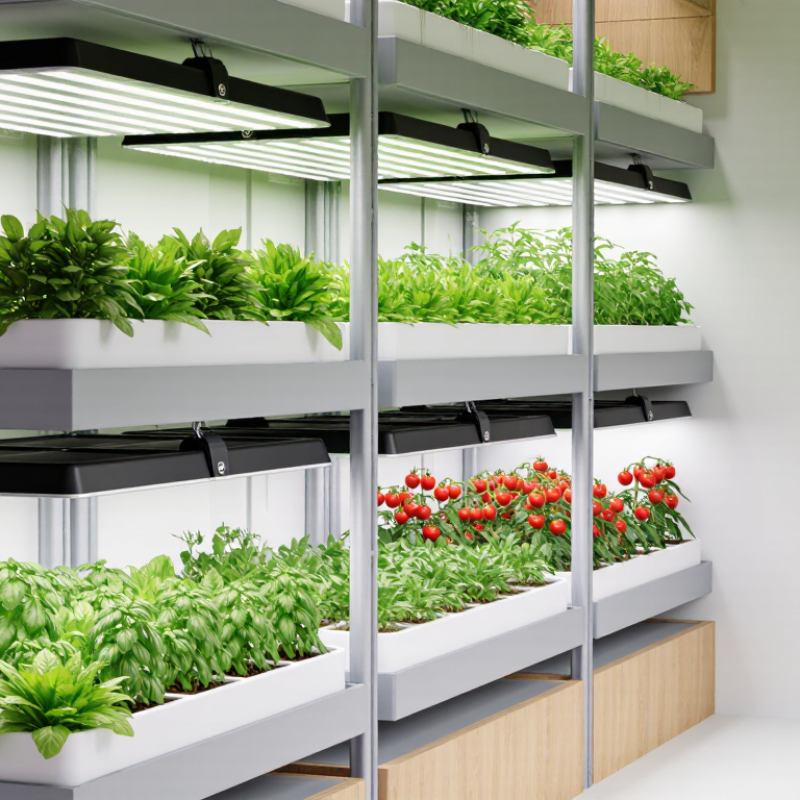
What Is the Best Indoor Vegetable Light Cycle in 2026?

Understanding Indoor Vegetable Light Cycles in 2026

In 2026, indoor vegetable lighting is less about maximum brightness and more about a repeatable daily rhythm. Most leafy greens perform well with 12 to 14 hours of light, followed by 10 to 12 hours of darkness. Seedlings often need 14 to 16 hours, while mature fruiting vegetables may benefit from 14 to 16 hours when temperature and moisture are controlled. The dark period matters. Plants use it for metabolic recovery, not as wasted time.

I recommend a reliable timer and a fixed schedule that matches the room’s temperature. A practical cycle is 6 a.m. to 8 p.m. for greens. Watch the leaves, not only the clock. Pale, stretched stems suggest insufficient intensity or excessive distance from the light. Curling edges, bleached patches, or dry media can indicate excessive intensity, heat, or poor watering. Light intensity at canopy level matters more than lamp wattage. A light meter can reveal uneven corners that the eye misses. Rotate trays weekly if coverage is inconsistent.

There is no universal “best” cycle. A 16-hour schedule may accelerate growth, but it can also increase heat, water demand, and stress. I have found that a slightly shorter cycle often produces sturdier greens in warm rooms. Results still vary with cultivar and airflow. Keep a simple log of hours, temperature, irrigation, and leaf color. Adjust one variable at a time. That discipline is easy to ignore, and I still occasionally change two settings together, making the result harder to trust.

Matching Light Hours to Different Vegetable Types

In 2026, the best indoor vegetable light cycle depends on the crop, not a universal timer. Leafy greens usually perform well with 14 to 16 hours of light daily. Lettuce, spinach, kale, and arugula prefer steady brightness and a cooler dark period. Root vegetables need a similar schedule, although slower growth is normal. Radishes and baby carrots can tolerate 14 to 16 hours, provided their containers are deep enough. Darkness matters too. Plants need uninterrupted hours for recovery.

Fruiting vegetables often need stronger light, but longer exposure is not automatically better. Tomatoes, peppers, and eggplants commonly respond to 14 to 16 hours daily during active growth. Cucumbers may appreciate 16 hours when airflow and moisture are well controlled. Watch the leaves, not just the clock. Pale stretching suggests weak light, while curled edges or dry soil may signal excess heat. Practical indoor trials show that 16 hours can help seedlings, yet mature plants sometimes grow better after 14 hours. The room changes everything.

Tips: Start with 14 hours for one week. Record leaf color, height, and soil moisture. Keep lights at a consistent distance. Use a timer, but inspect plants manually. If leaves fade, shorten exposure or increase distance. If stems stretch, improve light intensity carefully. Avoid changing several conditions at once. Otherwise, the results become difficult to interpret.

Choosing the Right Indoor Grow Light Spectrum

What Is the Best Indoor Vegetable Light Cycle in 2026?

Choosing the Right Indoor Grow Light Spectrum

Indoor vegetables need more than a bright lamp. They need usable photons, delivered consistently. For leafy greens, a practical starting point is 14 hours daily at 250 μmol/m²/s. That produces about 12.6 mol/m²/day, within a useful DLI range for many lettuce and herb crops. Fruiting vegetables often need 16 hours at 350–450 μmol/m²/s. Watch leaf temperature, not only the timer.

The U.S. Department of Energy’s 2023 Solid-State Lighting R&D Opportunities report identifies horticultural efficacy above 3.0 μmol/J as an important development target.

Spectrum changes plant shape.

Blue wavelengths around 400–500 nanometers can support compact growth and stronger leaves. Red wavelengths around 600–700 nanometers usually drive efficient photosynthesis. A balanced fixture should not be judged by color alone. Green light can reach lower leaves, while excessive far-red may cause stretching. Research from controlled-environment horticulture also shows that crop response depends on intensity, temperature, cultivar, and nutrition, not spectrum in isolation.

I prefer testing one variable at a time.

Begin with moderate blue and red output, then record height, leaf angle, color, and water use each week. My earlier mistake was chasing a “perfect” spectrum. There probably is not one.

A 2024 crop trial may not match your reflective walls, dusty fans, or winter window light. Adjust carefully.

Balancing Light, Darkness, Temperature, and Watering

The best indoor vegetable light cycle in 2026 is not a fixed number. It depends on the crop, room temperature, light intensity, and watering habits. In my experience, leafy greens grow reliably with 14 to 16 hours of light daily. Fruiting vegetables often perform better with 12 to 14 hours. Darkness is essential. Plants use this resting period to regulate growth and recover from heat and light stress. Keep the schedule consistent.

Temperature changes the ideal cycle. During the light period, many vegetables prefer 20–24°C. At night, 16–20°C usually reduces unnecessary stretching and moisture loss. Avoid placing plants against cold windows or near heating vents.

Roots need stable conditions, too. Wet soil in a warm room can encourage root problems, while dry soil under strong light causes rapid wilting. Water when the upper two centimeters feel dry, then let excess water drain completely. Wet roots need oxygen.

A practical way to refine the schedule is tracking daily light integral, or DLI, instead of trusting brightness alone. Leafy crops may need roughly 12–17 mol/m²/day, while fruiting crops can require 20–30. These figures vary with variety and plant age. I once extended the light period to solve slow growth, but the leaves curled because the room became too warm. The better adjustment was weaker light, improved airflow, and earlier watering. My current routine still needs small corrections after cloudy weeks or unusually dry air. Measure, then adjust.

Adjusting Light Cycles Across Vegetable Growth Stages

What Is the Best Indoor Vegetable Light Cycle in 2026?

Light cycles should change as vegetables develop. Seedlings usually perform well under 16–18 hours of light daily, followed by darkness. The darkness matters. It supports respiration and helps prevent thin, stressed growth. For leafy greens, 14–16 hours often works better after transplanting. Cornell University’s controlled-environment crop guidance places lettuce near 12–17 mol/m²/day of daily light integral, depending on cultivar and temperature.

During flowering vegetables, including tomatoes and peppers, growers often use 12–14 hours of light. More hours are not automatically better. Purdue Extension lighting guidance indicates many fruiting crops need roughly 20–30 mol/m²/day, but heat and water demand also rise. A timer should therefore match light intensity, not replace it. A weak lamp running for 18 hours may still deliver less useful light than a stronger lamp running for 14 hours.

Watch the plants closely. Pale leaves, stretched stems, or dry leaf edges suggest an imbalance. I prefer changing the schedule by one hour every few days, then checking growth and moisture. This is not perfect. Different cultivars respond differently, and published recommendations rarely fit every indoor room. Keep a simple log of hours, temperature, watering, and leaf color. Small records often reveal more than guesswork.

What Is the Best Indoor Vegetable Light Cycle in 2026? - Adjusting Light Cycles Across Vegetable Growth Stages

Growth Stage Typical Duration Light On / Off Photoperiod Target PPFD at Canopy Approx. DLI Suitable Vegetables Adjustment Guidance
Germination 3–10 days Optional until emergence; then 16 / 8 14–16 hours 50–150 μmol/m²/s 2.6–8.6 mol/m²/day Lettuce, spinach, basil, radish, kale Once seedlings emerge, provide gentle light immediately to reduce stretching. Keep the light close enough to maintain even illumination without heating the seedlings.
Seedling Development 1–3 weeks 16 / 8 14–16 hours 100–200 μmol/m²/s 5.0–11.5 mol/m²/day Tomato, pepper, cucumber, cabbage, lettuce Increase intensity gradually over several days. Excessive intensity can cause pale leaves, curling, or slowed growth, especially when roots are still small.
Leafy-Green Vegetative Growth 2–6 weeks 16 / 8 14–18 hours 150–250 μmol/m²/s 7.6–16.2 mol/m²/day Lettuce, arugula, spinach, pak choi, mustard greens Use the lower end in warm rooms or with light-sensitive crops. If leaves become unusually pale or develop dry edges, reduce intensity or improve cooling and watering consistency.
Herb and Compact Crop Growth 3–8 weeks 16 / 8 14–16 hours 150–300 μmol/m²/s 7.6–17.3 mol/m²/day Basil, cilantro, parsley, mint, chives A consistent 16-hour schedule generally supports compact growth and regular harvests. Provide airflow because dense herbs can retain moisture around the leaves.
Root and Bulb Enlargement 4–12 weeks 14–16 / 8–10 14–16 hours 150–250 μmol/m²/s 7.6–14.4 mol/m²/day Radish, beet, carrot, turnip, green onion Light primarily supports the foliage, which supplies energy to the edible underground portion. Avoid extending the day so far that plants receive inadequate dark recovery.
Flowering and Fruiting 6–16+ weeks 14–16 / 8–10 14–16 hours 250–500 μmol/m²/s 12.6–28.8 mol/m²/day Tomato, pepper, cucumber, eggplant, dwarf beans Prioritize total daily light, temperature control, pollination, and nutrition. Increase intensity only when plants are healthy and the growing area can dissipate additional heat.
Pre-Harvest and Recovery 3–14 days, depending on crop 12–16 / 8–12 12–16 hours 100–300 μmol/m²/s 4.3–17.3 mol/m²/day Leafy greens and herbs approaching harvest After heavy harvesting or visible stress, temporarily lower intensity while maintaining a regular dark period. Resume the previous schedule once new growth is healthy.
Planning note: DLI values are approximate and calculated from PPFD and photoperiod. Use a light meter when possible, keep the dark period uninterrupted, and adjust the schedule according to plant response, room temperature, humidity, cultivar, and available ventilation.

FAQS

How many light hours do indoor leafy vegetables need?

Most leafy greens perform well with 12 to 14 hours of light daily. Give them 10 to 12 hours of darkness. The dark period supports recovery. It is not wasted time.

What light schedule suits indoor seedlings?

Seedlings often need 14 to 16 hours of light. A fixed schedule helps them develop evenly. Try 6 a.m. to 8 p.m. Check their stems, too.

How long should fruiting vegetables receive light?

Mature fruiting vegetables may benefit from 14 to 16 hours daily. Control temperature and moisture carefully. Longer lighting can increase heat and water demand. More light is not always better.

What light intensity is suitable for leafy greens?

A practical starting point is 250 μmol/m²/s for 14 hours. This provides about 12.6 mol/m²/day. That level suits many lettuce and herb crops. Measure light at leaf height.

How can I tell if the light is too weak?

Pale leaves and stretched stems often indicate insufficient intensity. The lamp may also be too far away. Corners can remain dim. A light meter reveals uneven coverage better than your eyes.

How can I recognize excessive light or heat?

Curling leaf edges, bleached patches, and dry growing media are warning signs. Heat and poor watering can create similar symptoms. Check leaf temperature, not only the timer. I sometimes blame the light too quickly.

Does light spectrum affect indoor vegetable growth?

Yes. Blue wavelengths around 400–500 nanometers can support compact growth. Red wavelengths around 600–700 nanometers support efficient photosynthesis. Green light may reach lower leaves. Too much far-red light can encourage stretching.

Should I change several growing settings together?

Change one variable at a time. Record lighting hours, temperature, irrigation, height, and leaf color weekly. Rotate trays when coverage looks uneven. I still sometimes change two settings together, weakening my conclusions. Small logs help.

Conclusion

In 2026, successful indoor vegetable gardening depends on creating a consistent light cycle that matches each plant’s natural growth needs. The question “what is the best light cycle for indoor vegetable gardening” does not have one universal answer, because leafy greens, herbs, root vegetables, and fruiting crops may require different amounts of daily light. Understanding the relationship between light hours and darkness helps prevent weak growth, stress, and poor development.

A balanced indoor setup should combine an appropriate light spectrum with stable temperatures, regular watering, and sufficient dark periods for plant recovery. Seedlings may benefit from a carefully managed schedule that supports steady early growth, while mature plants can require adjustments as they produce leaves, roots, or fruit. By observing plant responses and gradually changing light duration or intensity, growers can create an efficient cycle that supports healthy development throughout every stage.

Madeline

Madeline

Madeline is a dedicated marketing professional with a wealth of expertise in our company's core offerings. With a keen understanding of the industry, she brings a unique perspective to her role, consistently delivering high-quality content that highlights the superior aspects of our products. As......