Choosing a grow light by wattage alone can leave indoor plants dim, stressed, or exposed to more light than they need. The number on the box describes electrical use, not the light reaching each leaf. For a useful comparison, check the fixture’s photosynthetic photon output, its coverage area, and the recommended hanging distance. Then consider the plant’s growth stage and how many hours the light will run each day.
Plant-lighting researcher Dr. Bruce Bugbee has emphasized the importance of measuring light delivered to plants, rather than relying on a fixture’s wattage. A careful paraphrase of his guidance is: “Measure the light reaching the canopy, not watts alone.” That distinction matters. A compact LED may use fewer watts than an older fixture yet deliver usable light efficiently. Still, efficiency figures cannot tell the whole story. Beam spread, placement, and room reflections affect what reaches a plant’s leaves.
There is no perfect wattage chart. A sunny windowsill, a shelf of seedlings, and a dense fruiting canopy need different setups. Watch for clues: leggy stems can signal insufficient light, while bleached patches or curled leaves may suggest excessive intensity. These signs are not proof on their own; watering, heat, and nutrition can cause similar symptoms. This guide explains how to choose the right grow light wattage for indoor plants by connecting fixture specifications with plant needs and real growing conditions. Start with the label. Then verify what happens at canopy level. That extra check is easy to skip—and worth reconsidering.
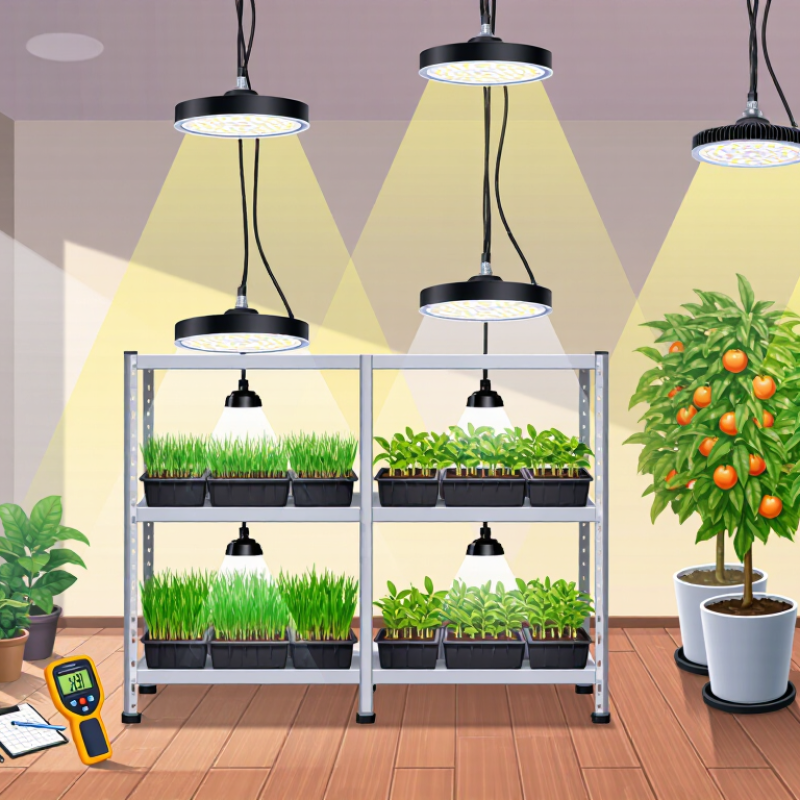
Grow light wattage measures how much electrical power a lamp uses, not how much usable light reaches a plant. A 40-watt light draws roughly 40 watts while operating, but its brightness for plants depends on how efficiently it converts power into photosynthetic light. That output is often described through PPFD, measured in micromoles of light per square meter per second. The distinction matters. Two lights with the same wattage can deliver different amounts of light.
Wattage still helps estimate energy use and compare similar lights. For example, a 30-watt lamp running for 10 hours uses about 0.3 kilowatt-hours. But wattage alone cannot tell you whether a seedling tray or a leafy houseplant will receive enough light. Check the manufacturer’s coverage and PPFD readings at the stated hanging distance, then consider your plant’s needs. A reading taken close to the lamp may look impressive; move it farther away, and the intensity can drop sharply. I used to treat a higher wattage as an easy shortcut. It isn’t quite that simple. Measure at leaf height when possible, and watch for signs such as stretched stems or pale, scorched leaves. Plants vary, and a small room can make even a modest lamp feel intense.
A plant’s wattage needs depend on what it is growing and how much light reaches its leaves. Lettuce and many leafy herbs usually need less intensity than fruiting plants such as tomatoes. But the label’s wattage alone can mislead: fixture efficiency, hanging height, and the illuminated area all affect usable light. Check the manufacturer’s coverage guidance, then observe the canopy for uneven growth.
Growth stage matters, too. Seedlings have small leaves and can be stressed by intense light placed too close. Start with a gentler setting or greater distance, then increase exposure gradually as plants develop. Watch for pale, curling leaves or stretched stems; these can signal that conditions need adjustment, though watering and temperature may also be responsible. No single symptom tells the whole story.
Mature, flowering, or fruiting plants often benefit from stronger light than young starts, provided the fixture covers the full canopy. A dimmable light makes these transitions easier. Keep notes on the setting, distance, and plant response for a week or two. It is not a perfect experiment—cloudy windows and changing room temperatures complicate comparisons—but careful observation beats guessing from wattage alone.
| Plant Type | Growth Stage | Target Light at Canopy (PPFD) | Typical Daily Light Period | Approx. LED Wattage for a 2 × 2 ft (0.37 m²) Area |
|---|---|---|---|---|
| Herbs and leafy greens | Seedlings and young plants | 100–200 µmol/m²/s | 14–16 hours | 15–30 W |
| Lettuce, spinach, and other leafy crops | Active vegetative growth | 200–300 µmol/m²/s | 12–16 hours | 30–45 W |
| Low- to medium-light tropical foliage plants | Established foliage growth | 50–150 µmol/m²/s | 10–14 hours | 7–22 W |
| Flowering houseplants, such as African violets | Bud formation and flowering | 150–300 µmol/m²/s | 12–14 hours | 22–45 W |
| Tomatoes, peppers, and other fruiting crops | Flowering and fruiting | 400–600 µmol/m²/s | 12–16 hours | 60–90 W |
Wattage estimates assume an LED efficacy of about 2.5 µmol/J and an evenly lit 2 × 2 ft canopy. Actual needs vary with fixture efficiency, hanging height, light distribution, and plant response. Use a dimmer or adjust the fixture height to reach the target canopy PPFD; wattage alone does not indicate how much light reaches the leaves.
The growing area sets the total light your plants need. A 2-by-2-foot canopy covers about 0.37 square meters, while a 2-by-4-foot canopy needs roughly twice the light at the same intensity. Wattage alone can mislead: the DesignLights Consortium’s Horticultural Lighting Technical Requirements evaluates fixtures by photon efficacy, measured in micromoles per joule. More efficient fixtures can deliver the same light with fewer watts.
For a practical estimate, multiply target PPFD by canopy area, then divide by fixture efficacy. At 300 µmol/m²/s across 0.37 m², the canopy needs about 111 µmol/s. Assuming a fixture efficacy of 2.5 µmol/J, that equals roughly 44 watts before accounting for light that spills beyond the plants. Real layouts vary. Shelves, reflective walls, hanging height, and dense leaves all change how much light reaches the canopy. That estimate is a starting point, not a promise.
Tips: Measure the lit canopy, not the whole room. Check PPFD at several points, including the corners; a bright center can hide dim edges. If plants stretch there, reassess coverage before adding wattage. I’d still treat any single reading cautiously.
Matching wattage starts with the plant and growing area, not a universal watts-per-plant rule. University of Minnesota Extension classifies indoor light as low at 50–250 foot-candles, medium at 250–1,000, and high above 1,000. These ranges help describe placement, but foot-candles reflect human vision. For grow lights, check photosynthetic photon flux density (PPFD) at leaf height and across the canopy. ASABE’s S640 standard defines the plant-light units used for these measurements. Watts show electricity use, not how much usable light reaches your leaves.
Estimate daily light as well as intensity. For example, 200 μmol/m²/s for 14 hours provides about 10.1 mol/m²/day, using the DLI calculation described by ASABE S640. Compare that figure with guidance for your species and growth stage; leafy seedlings and sun-loving fruiting plants do not share one target. Then choose a fixture whose measured output covers the whole growing area, and adjust its distance or timer while watching for stretched stems, pale leaves, or scorching. That shortcut is tempting. It can mislead. Fixture efficiency, hanging height, and shelf shape all change the light plants receive, so a wattage label alone is a rough starting point, not a dependable match.
Choosing grow light wattage is not just a matter of picking the biggest number. Wattage describes the electricity a fixture uses, but it does not show exactly how much useful light reaches each leaf. Light output, coverage, and distance from the canopy matter too. A powerful fixture placed too far away may leave plants stretching toward the light. Too close, and leaves can become pale, curled, or warm to the touch.
Match the light to your growing space and plants. Seedlings and leafy herbs may need less intensity than fruiting plants, though their needs vary with growth stage. Check the fixture’s coverage information or PPFD chart when available, then observe the plants over several days. New growth should stay compact and evenly colored. Not every yellow leaf means the wattage is wrong; watering and nutrients can also be involved. It is easy to blame the light too quickly.
Right-sized lighting can support healthy growth without wasting electricity. Estimate energy use with this simple calculation: watts × daily hours ÷ 1,000 equals kilowatt-hours per day. A timer helps keep the schedule consistent and prevents lights from running longer than needed. Watch the canopy, too. If it feels hot, raise the fixture or reduce intensity where possible. Small adjustments take patience. Sometimes the “ideal” setting still needs a little revision as plants grow.
No. Wattage measures electricity use, not the useful light reaching leaves. Fixture efficiency and distance matter. Bigger is not always better.
Usually not. Seedlings may need gentler light or more distance. As plants mature, increase exposure gradually and watch their response.
Look for pale, curling, or warm leaves. These signs can also have other causes, so check watering and temperature too.
Not necessarily. Leafy herbs often need less intensity than fruiting plants, but species and growth stage change the target.
Check the fixture’s coverage guidance and, if available, its PPFD chart at leaf height. Make sure light reaches the whole canopy.
It combines light intensity and exposure time. For example, 200 μmol/m²/s for 14 hours provides about 10.1 mol/m²/day. Targets vary by plant.
Multiply watts by daily operating hours, then divide by 1,000. The result is kilowatt-hours per day. A timer helps keep the schedule steady.
Change the distance or intensity gradually, then observe new growth for several days. Keep notes on settings and plant response. It is not a perfect test; room temperature and window light can interfere.
Choosing the right grow light wattage for indoor plants begins with understanding what wattage represents: the electrical power a light uses, not necessarily the amount of light plants receive. The best choice depends on the plant’s light needs, its growth stage, and the size of the growing area. Seedlings and low-light plants may need less intense lighting, while flowering or fruiting plants often require stronger, more consistent illumination. A larger growing space also calls for enough total light to cover plants evenly, rather than concentrating brightness in one spot.
To determine how to choose the right grow light wattage for indoor plants, consider the light’s coverage and output alongside your plants’ specific requirements. Position the light at an appropriate distance and adjust its schedule as plants develop. Matching wattage to both the growing area and growth stage can support healthy, balanced growth, reduce the risk of too little or excessive light, and help avoid wasting electricity.
