How far should grow lights be from seedlings? In 2026, the answer still depends on the lamp, its output, and the plants beneath it. A small LED panel can sit closer than a powerful fixture, but distance alone does not reveal how much usable light reaches the leaves. Dr. Bruce Bugbee, a plant physiologist and controlled-environment agriculture researcher, has said, “Light is the most important factor in plant growth.” His point matters at seedling stage: too little light can leave stems thin and leaning, while excessive intensity may bleach or curl tender leaves.
This guide explains how far should grow lights be from seedlings without treating one measurement as universal. It covers practical starting distances for common LED and fluorescent fixtures, then shows how to adjust them using plant responses. Look at the leaves, not just the ruler. Healthy seedlings usually hold compact stems and evenly colored leaves; stretched growth can signal insufficient light, while pale patches or crisp edges may indicate stress. Check the fixture’s guidance when available, and measure from the light to the top of the canopy—not the tray. Keep the lamp level, and raise it as seedlings grow. That sounds simple. It is not always.
A distance chart is a starting point, not a guarantee. Fixture strength, room temperature, reflective surfaces, and daily lighting hours can change the result. I’d be cautious about any rule promising one perfect distance for every setup. Small adjustments, followed by close observation, are more dependable than guesswork.
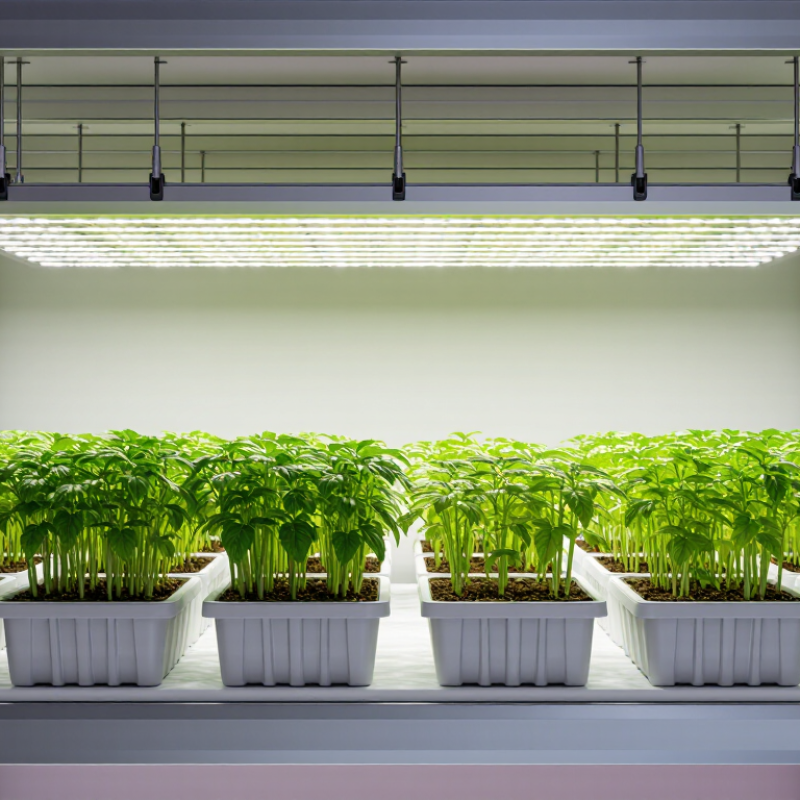
Identify Your Fixture’s Output and Manufacturer-Recommended Starting Distance
Start with the fixture’s manufacturer-recommended distance for seedlings. It is a safer baseline than guessing from wattage or copying another grower’s setup. Check the manual for the recommended hanging height, dimming level, and coverage area. If the fixture lists PPFD values, note the measurement distance; output can change sharply as the light moves closer. Not just wattage.
A small seedling tray may need less intensity than a full, leafy canopy. Keep the light centered, and measure from the fixture to the tops of the seedlings—not to the potting mix. A basic light meter can help compare readings across the tray. Phone apps are less reliable, so treat their numbers as rough clues, not precise measurements. I would not trust a single reading too much.
After setting the recommended starting distance, watch the plants for several days. Pale, curled, or unusually warm leaves can signal excessive intensity or heat; stretched stems may indicate insufficient light. These signs have other possible causes, so check watering and room temperature too. Make small height adjustments, then give the seedlings time to respond. The first setting may not be perfect. That is normal.
How Far Should Grow Lights Be From Seedlings in 2026?
Identify your fixture’s output and use the manufacturer-recommended starting distance. Then check light intensity at seedling height.
Reading the chart: These are common practical PPFD guide ranges at the canopy, not universal settings. Fixture output, beam spread, and growing conditions affect the distance needed. Start with the maker’s guidance and use a PAR meter, if available, to adjust the height.
Set Seedlings Near 100–300 µmol·m⁻²·s⁻¹ PPFD
Keep the seedling canopy near 100–300 µmol·m⁻²·s⁻¹ PPFD, as the subtitle recommends. There is no single correct hanging height: lens design, wattage, and beam angle change the intensity at leaf level. Measure where the leaves sit, not directly beneath the center of the lamp. A phone app can help compare positions, but a quantum sensor gives a more dependable PPFD reading. This range is a useful starting point, not a guarantee; species and natural window light matter.
ANSI/ASABE S640-2017 standardizes plant-light measurements, including PPFD. Faust and Logan’s 2018 HortScience review discusses daily light integral (DLI), which connects intensity with exposure time. At 150 PPFD for 16 hours, seedlings receive about 8.6 mol·m⁻²·day⁻¹. At 100–300 PPFD over the same schedule, the estimated DLI is 5.8–17.3 mol·m⁻²·day⁻¹. Raise or lower the fixture gradually, then check for stretched stems, pale leaves, or dry leaf edges. Those signs are imperfect clues, not a diagnosis.
Tips: Start with the light higher, measure at leaf level, and adjust in small steps. Keep a ruler beside the tray. Recheck as seedlings grow; yesterday’s safe distance may be too close today.
Check Daily Light: 150 PPFD for 16 Hours Delivers About 8.6 DLI
A reading of 150 µmol·m⁻²·s⁻¹ for 16 hours gives seedlings about 8.6 mol·m⁻²·day⁻¹ of light. The calculation is PPFD × seconds of light ÷ 1,000,000. Faust and Logan’s 2018 HortScience review describes daily light integral as a useful way to compare light received over a full day. Measure at leaf level. A lamp’s distance alone cannot tell you the PPFD; fixture output, optics, and coverage all matter.
Use 150 PPFD as a measured starting point, not a universal recipe. The University of Minnesota Extension recommends 12–16 hours of light daily for seedlings, while crop needs and growing conditions vary. Keep the fixture close enough to avoid dim, stretched stems, but check the canopy with a quantum sensor and raise the light as plants grow. Watch the leaves, too: bleaching, curling, or unusually warm foliage can signal excessive intensity or heat. I would recheck readings after moving trays or adding a nearby window; daylight can quietly change the total. Some seedlings may do well at 8.6 DLI, while others need adjustment. That uncertainty is real.
Measure PPFD at Canopy Level and Adjust the Light Height
Seedlings need a measured light level, not a fixed lamp distance. PPFD describes the light reaching a surface each second, in micromoles per square meter per second. Measure it at canopy level, where the highest leaves sit. Many seedlings grow well around 100–250 µmol/m²/s, but crop type and daily light duration matter. Check your seed packet or a trusted growing guide for crop-specific advice.
Take readings at the center and corners of the tray. A single reading can miss dim edges or a bright center. Raise or lower the light in small steps, then measure again; even a few centimeters can change the canopy reading. Watch for stretched stems, pale patches, or curled leaves, but remember that watering and temperature can cause similar signs. One imperfect reading is easy to trust too much. Measure again tomorrow.
Tips: Keep the meter level with the leaves. Record PPFD, lamp height, and light hours. Small changes matter. Recheck after seedlings grow or the tray moves.
How Far Should Grow Lights Be From Seedlings in 2026? — Measure PPFD at Canopy Level and Adjust the Light Height
Practical starting targets for common seedlings under a dimmable, full-spectrum LED grow light.
| Seedling type |
Target PPFD at canopy |
Example photoperiod |
Approximate DLI |
Initial light height |
How to adjust |
| Lettuce and other leafy greens |
100–200 µmol/m²/s |
16 hours per day |
5.8–11.5 mol/m²/day |
Start about 30–60 cm (12–24 in) above the canopy |
Measure PPFD at leaf level. Raise or dim the light if readings exceed the target; lower it or increase output if readings are below target. |
| Tomato seedlings |
150–250 µmol/m²/s |
16 hours per day |
8.6–14.4 mol/m²/day |
Start about 30–60 cm (12–24 in) above the canopy |
Check the center and edges of the tray. Adjust height or dimming so most seedlings receive light within the target range. |
| Pepper seedlings |
150–250 µmol/m²/s |
16 hours per day |
8.6–14.4 mol/m²/day |
Start about 30–60 cm (12–24 in) above the canopy |
Recheck as plants grow. Keep the canopy within range rather than relying on a fixed distance from the tray. |
| Brassicas, such as broccoli and cabbage |
150–250 µmol/m²/s |
16 hours per day |
8.6–14.4 mol/m²/day |
Start about 30–60 cm (12–24 in) above the canopy |
If seedlings stretch, verify PPFD and coverage before moving the light closer. Increase light gradually and watch for bleaching or leaf stress. |
| Basil and other culinary herbs |
150–250 µmol/m²/s |
16 hours per day |
8.6–14.4 mol/m²/day |
Start about 30–60 cm (12–24 in) above the canopy |
Measure at the tops of the leaves and across the growing area; adjust the fixture or dimmer to maintain even coverage. |
How to use these figures: PPFD is the light arriving at the canopy, measured in µmol/m²/s. DLI is the daily light integral; the examples above are calculated for a 16-hour photoperiod. The 30–60 cm (12–24 in) height is only a starting range for a typical dimmable LED panel, not a universal setting. Fixture power, optics, dimming, and canopy size all affect the result. Measure PPFD at seedling height, follow the light manufacturer’s safety guidance, and recheck as the canopy grows.
Watch for Stretching or Bleaching; Recheck as Seedlings Grow
A fixed distance rarely suits every grow light. Output, lens design, and room temperature all change how much light reaches a seedling. Start with the light maker’s recommended range, then keep seedlings evenly lit without letting leaves feel warm. Look closely. Pale, dry patches near the top can signal excess light or heat, though watering stress can look similar. Check the growing medium and airflow before moving the lamp.
Stretching is another useful clue. Long, thin stems leaning toward the light often mean seedlings need stronger light, or more even coverage. Raise or lower the fixture in small steps, rather than making a dramatic change. I would also rotate trays if one side gets noticeably more light. Not overnight. Watch new growth over the next few days; older damaged leaves may not recover, so they are a poor measure of improvement. As seedlings gain height, recheck the gap every few days. A distance that worked last week may now be too close. I still find it easy to miss a gradual change, especially when several trays grow at different rates. A simple ruler and quick daily look can help, but the leaves remain the clearest guide.
Conclusion
The right answer to “how far should grow lights be from seedlings” depends on the fixture’s output, so begin with its instructions and recommended starting distance. Aim for roughly 100–300 µmol·m⁻²·s⁻¹ PPFD at the seedling canopy. Light height alone does not determine intensity: fixture design and brightness matter, so measure PPFD where the leaves are rather than relying on a general distance rule.
Consider both intensity and daily exposure. At 150 PPFD for 16 hours, seedlings receive about 8.6 DLI. Check the canopy daily and raise or lower the light gradually to keep conditions suitable as plants grow. Watch for clues: stretched, weak stems can indicate insufficient light, while pale or bleached leaves may suggest excessive intensity. Recheck measurements and plant response regularly, since the ideal distance can change as seedlings develop.

